Article Samples
The Japan Times. May, 2025.
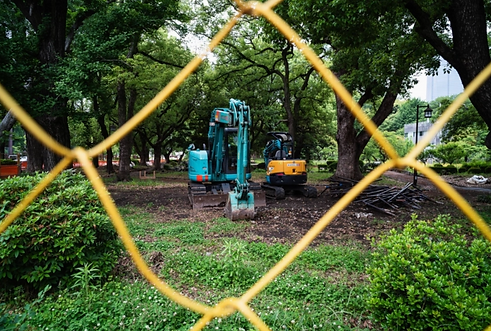
It wasn’t the heat of the sun that stopped me in my tracks on a Shinjuku street — it was the absence of shade. I had just gotten back from a visit to Nagoya, where I once lived amid smokestacks and train lines. For the first time in years, I made a pilgrimage to see the Giant Camphor Tree that grows on the grounds of Atsuta Shrine. Its hulking, thousand-year-old limbs capture the strong sunlight and cast it soft and dappled, as if its leaves were green stained glass, onto those below. The tree had a way of making the grounds quiet, the air cool and the breeze feel full of the rich and healing scent of life...
The Japan Times. November, 2023.
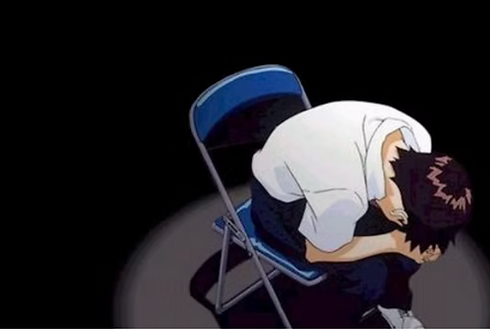
It was a LinkedIn message that sent me over the edge. An AI company was trying to recruit me to train their large language models — algorithms that can perform advanced processing tasks by “learning” from huge datasets — in Japanese. The world of AI-generated text, art and music is endlessly fascinating, but as a writer and translator from Japanese into English, the sheer audacity of the message lit a fire in me...

The Evergreen Review. August, 2021.
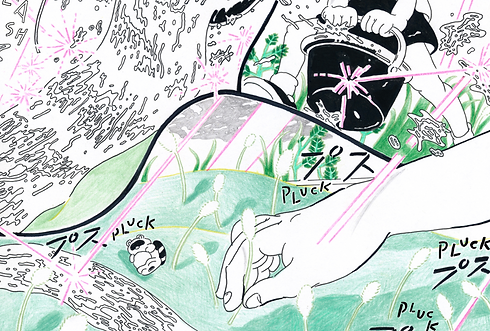
The era of mainstream manga has already arrived in the U.S. in full force. Popular titles, old and new, high-brow and low-brow, line bookstore shelves and dominate American comics sales. While manga accompaniments of top-selling anime from Naruto to Attack on Titan have long been huge American hits, the manga market is expanding in substantial ways into untrodden territory: pulpy, niche genre comics and experimental, literary graphic novels alike. The simultaneous explosion in these twin areas in recent years reveals the genre’s greatest strengths, fundamental market flaws, and the mind of the American manga consumer...
Slate. July, 2021.
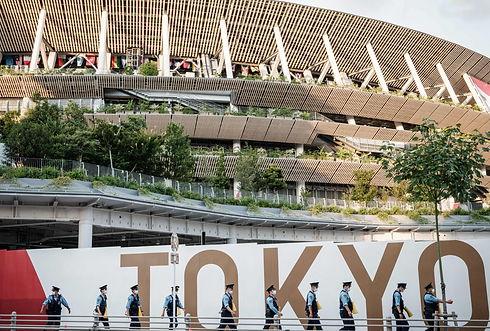
The Olympics, and accordingly Olympic architecture, are supposed to be triumphant. Exuberant. They emphasize spectacle, showmanship, and national pride. Look no further than the old National Stadium in Tokyo designed by Kenzo Tange for the 1964 Olympics—a dramatic, monumental design with its famous swooping, suspended roof. Or Ai Weiwei’s mind-numbing Bird’s Nest in Beijing for the 2008 Olympics, like a mega-cocoon for a steely monster, stretched-out steel beams zigzagging every which way. Zaha Hadid’s initial designfor the new National Stadium in Tokyo stunned with its futuristic, turbocharged bicycle helmet shape...
The New York Times. March, 2021.
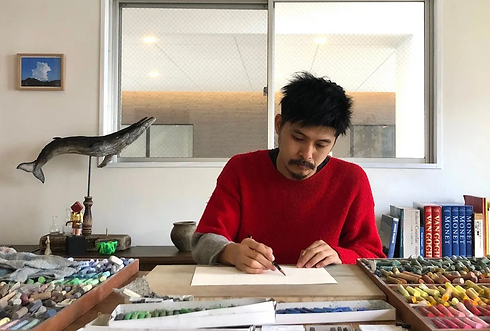
KUMAMOTO, Japan — A week before the artist, author and architect Kyohei Sakaguchi planned to move into one of his celebrated “zero yen” houses, built from recycled materials, the catastrophic 2011 earthquake struck Japan. A tsunami engulfed the Tohoku region and the Fukushima Daiichi nuclear power plant collapsed. He had recently begun treatment for bipolar disorder. Overwhelmed, he left Tokyo and headed back home to the verdant coastal city of Kumamoto in southwest Japan, and abandoned the recycling project...
The New Republic. November, 2020.
The Fukushima Daiichi meltdown in Okuma, Japan, on March 11, 2011, was one of the worst nuclear disasters in history. Some of the impacts can be easily quantified: 150,000 people were evacuated due to the threat of radioactivity, a forced migration that resulted in some 2,600 deaths; a full cleanup could take $70 billion and more than 40 years; 100 cubic meters of groundwater become contaminated at Fukushima every day; according to Greenpeace, radiation levels near reopened areas reach 30 times the recommended exposure levels. Other forms of damage, such as the long-lasting stigma on the region and the psychological and mental health strain on evacuees, don’t show up in statistics...

Foreign Policy. May, 2020.
In a 2019 survey, Japan dropped to 53rd in global English proficiency, squarely in the “low proficiency” band. Japan ranks near the bottom of Asian and developed countries alike despite constant reshuffling and refinement of the English educational curriculum in schools and the frequent assertions, acknowledged by Japan’s Ministry of Education, that English-language skills are needed to compete in the modern economy...
Metropolis Japan. November, 2019
Out of 225 Japanese novels in translation published in the U.S. since 2008, just 65 of them were written by women. This imbalance in translated fiction comes despite existing gender parity in Japanese literature. The real source of inequity is a world of Western publishing that hasn’t quite caught up to the history and present of women authors at the forefront of Japanese literature...

Vox. July, 2019